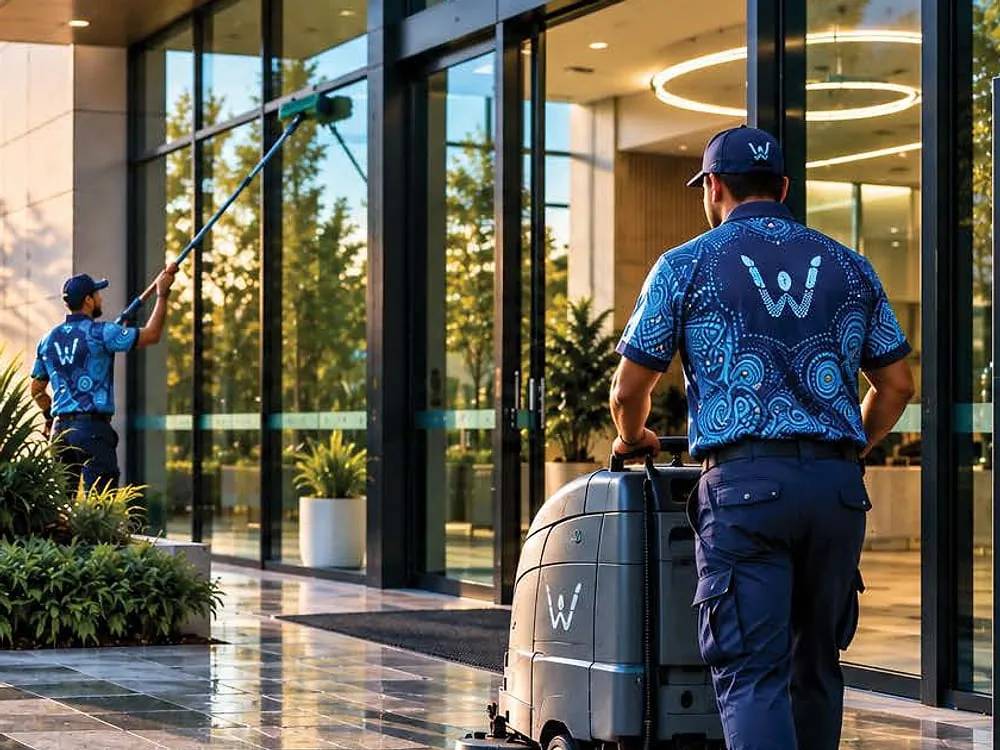
Accommodation villages and camps are where much of the Pilbara workforce eats, sleeps and recovers between shifts. A clean, well-kept village is good for health, morale and retention. A dirty one spreads illness through a crew and generates complaints quickly. This guide covers what camp and village cleaning involves, how it is usually scheduled and what to look for in a cleaning provider.
What camp and village cleaning covers
- Rooms: servicing occupied rooms on a set cycle, and full turnover cleans when a room changes occupant or roster, including bathrooms, floors, surfaces, beds and linen changes where included.
- Ablution blocks: shared toilets and showers cleaned and sanitised at least daily, more often in large or busy blocks.
- Kitchens and dining rooms: food preparation areas, cold rooms, servery, dining tables and floors cleaned to food-safety standards, coordinated with the catering team.
- Laundries: machines, benches, floors and lint filters.
- Common areas: wet mess, recreation rooms, gyms, offices, walkways and reception.
- Periodic work: carpet and floor deep cleans, window cleaning, air-conditioner filter cleaning, pressure cleaning of walkways and bin areas.
How it is scheduled
Village cleaning follows the roster. Room servicing is usually done while occupants are on shift, with turnover cleans concentrated on swing days when one crew leaves and another arrives. Ablutions, kitchens and common areas are cleaned daily or more often, and periodic work is spread across the month so it does not all land on a busy changeover.
The cleaning plan should be agreed with the village manager and catering provider so that kitchens, dining and room servicing fit around meal times and night shift sleep.
Pilbara-specific challenges
- Red dust. Fine iron-rich dust comes in on boots, clothing and PPE every shift. Entry matting, boot-wash areas, frequent floor cleaning and regular deep cleans of carpets and air-conditioning keep it under control.
- Heat and air-conditioning. Dusty filters reduce cooling and air quality. Filter cleaning should be on the schedule, not left until rooms get hot.
- Illness outbreaks. Gastro and respiratory illness spread fast in shared accommodation. Have an outbreak cleaning procedure agreed in advance, with extra sanitising of high-touch points, ablutions and dining areas.
- Remote logistics. Consumables, chemicals and replacement equipment need to be planned ahead, because a quick trip to the shops is not an option at a remote site.
- Wet season. Humidity and storms bring mould risk in bathrooms and rooms that are closed up, and clean-ups after heavy rain.
Choosing a camp cleaning provider
- Do they understand roster-based scheduling and swing-day turnovers?
- Can they show their site induction, safety and chemical management processes?
- How do they handle outbreak cleaning, and how quickly can they scale up?
- Can they also provide periodic work such as carpet cleaning, pressure cleaning, windows and minor maintenance, so fewer contractors need inducting?
- How do they report on completed work and inspections?
- Do they support your local and Indigenous participation commitments?
Warlimagu is an Aboriginal-owned Pilbara business providing commercial cleaning, carpet and floor care, pressure cleaning and facilities management for accommodation, camps and villages in Karratha, Port Hedland, Newman and remote sites across the Pilbara. Request a quote for your village.