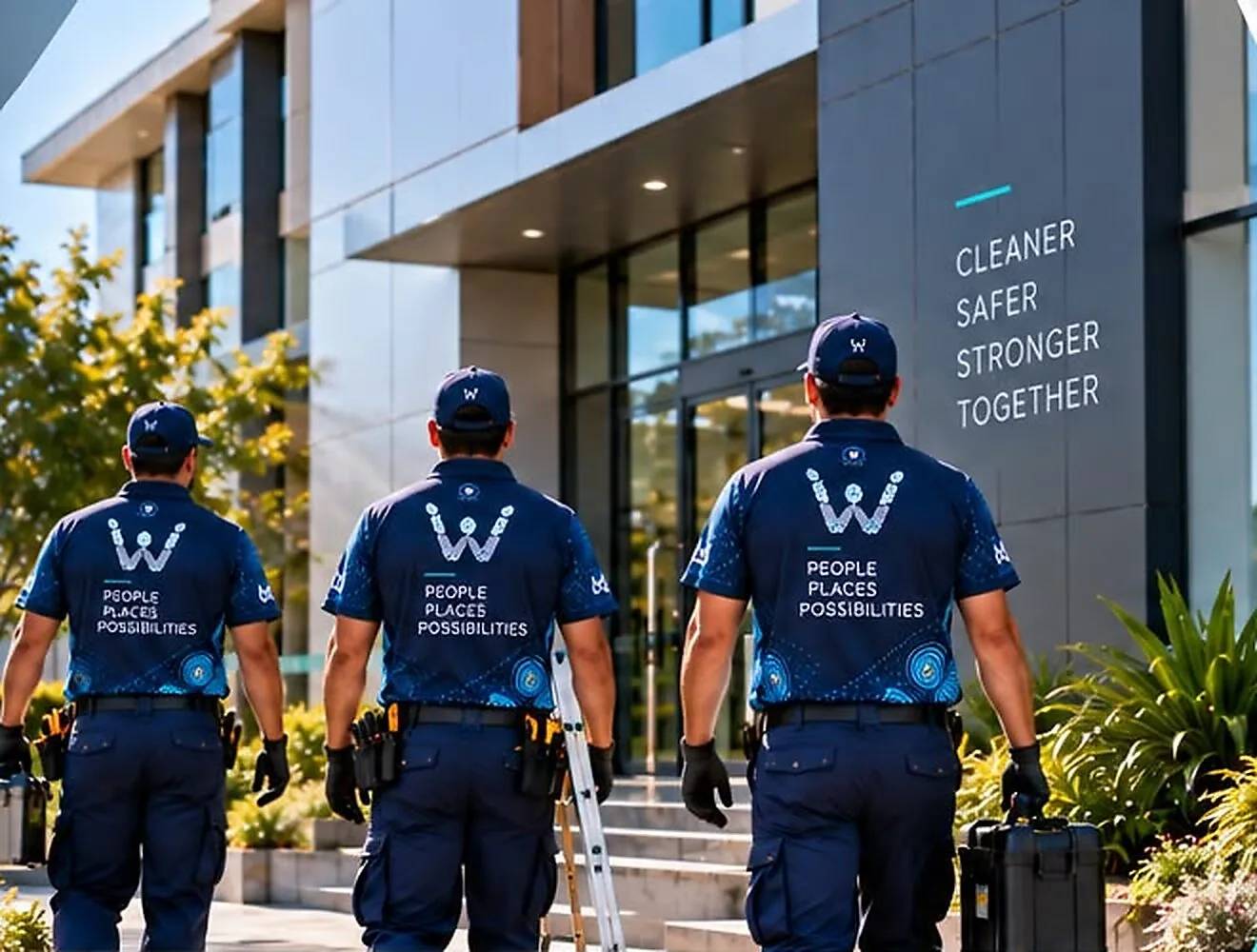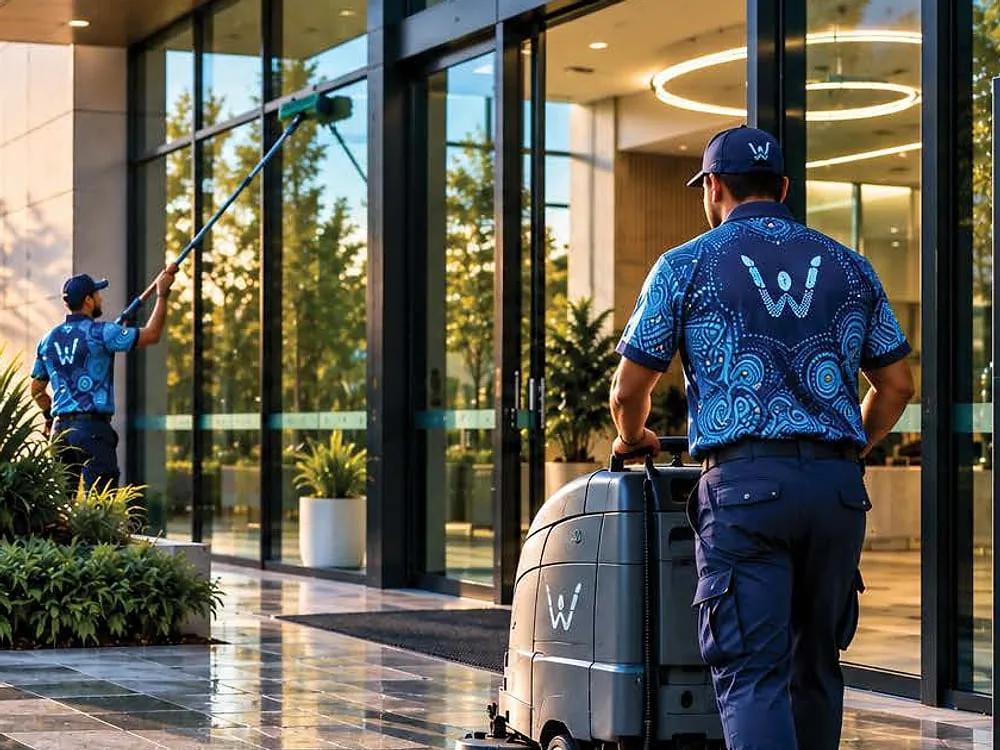
Commercial cleaning in the Pilbara is a different job from cleaning an office tower in Perth. Red dust is tracked in on every boot, heat changes how chemicals behave, cyclones bring water and debris, and many sites run around the clock on rosters. A cleaning program that ignores those conditions looks fine on paper and falls apart within a few weeks.
This guide is for office and site managers, facility and property managers, accommodation operators and procurement teams in Karratha, Port Hedland, Newman and across the Pilbara. It covers what commercial cleaning includes, how to build a schedule that holds up, mine-site and crib room hygiene, chemical safety, specialist cleaning, pricing, and how to choose a cleaning provider.
In this guide
- What commercial cleaning includes
- How Pilbara conditions change cleaning
- Building a cleaning schedule
- Mine sites, camps and crib rooms
- Washrooms, touchpoints and colour coding
- Chemical safety and the environment
- Specialist cleaning
- How cleaning contracts are priced
- Keeping quality consistent
- How to choose a commercial cleaner
- Frequently asked questions
What commercial cleaning includes
Most cleaning programs combine three layers of work:
| Layer | What it covers | Typical frequency |
|---|---|---|
| Routine cleaning | Bins, desks and surfaces, kitchens, washrooms, vacuuming and mopping, consumables | Daily or several times a week |
| Periodic cleaning | High-level dusting, internal glass, skirting boards, vents, appliance cleaning, detailed washroom descaling | Weekly to quarterly |
| Specialist cleaning | Carpet extraction, hard floor strip and seal, external windows and facades, pressure cleaning, solar panels, vehicles and machinery | Quarterly, annually or as needed |
Getting the balance right between the three layers is what keeps a site looking good all year rather than only after a deep clean. See our commercial cleaning service for what we deliver.
How Pilbara conditions change cleaning
Red dust
The Pilbara’s fine, iron-rich dust is the biggest single factor. It is abrasive, so floors walked on with dusty boots lose their finish quickly, and it stains grout, carpets and light-coloured surfaces. Practical measures make a big difference:
- Entrance matting long enough to take several steps on, cleaned or swapped regularly. Most dust that is stopped at the door never needs to be cleaned off the floor.
- Dust control before wet cleaning. Vacuum or dust-mop first; mopping a dusty floor just spreads mud.
- Microfibre and HEPA-filter vacuums that capture fine dust instead of moving it around.
- Floor protection. Sealed or polished hard floors hold up far better than bare surfaces, and need a proper maintenance cycle.
Heat
In high temperatures, cleaning solutions evaporate before they have time to work, and products can dry onto glass and paintwork leaving streaks or marks. Cleaning outdoor surfaces, vehicles and windows early or late in the day, and following the label’s contact time, gives much better results.
Water and scale
Hard water and scale build-up are common in regional water supplies, and they show up quickly on tapware, glass shower screens, tiles and toilets. Regular descaling as part of the periodic schedule stops it becoming permanent.
Cyclones and the wet season
From November to April, storms can bring water damage, mud and debris. Fast drying and cleaning after an event limits mould and odours, and external areas often need pressure cleaning once the weather clears. Our facilities management guide includes a cyclone preparation checklist.
Rosters and 24/7 operations
On sites that never close, cleaning has to work around shift changes, crib breaks and night work. The schedule should be built around when areas are actually free, not office hours.
Building a cleaning schedule
A written schedule is the single most useful document in any cleaning contract. It tells the cleaner exactly what to do and gives you something to check against. A typical starting point for a commercial site:
| Area | Daily | Weekly | Monthly or periodic |
|---|---|---|---|
| Entrances and reception | Vacuum or dust-mop, clean glass doors, empty bins, shake out or clean mats | Spot-clean walls and doors | Machine-clean hard floors, replace or deep-clean mats |
| Offices and meeting rooms | Empty bins, wipe desks and touchpoints, vacuum high-traffic areas | Full vacuum, dust ledges and furniture | High-level dusting, vents, internal glass |
| Kitchens and crib rooms | Benches, tables, sinks, appliance fronts, floors, bins | Microwave and fridge exterior, splashbacks | Fridge clean-out, oven and rangehood, behind appliances |
| Washrooms and ablutions | Toilets, urinals, basins, mirrors, floors, restock consumables | Partitions, walls, drains | Descaling, grout and tile detail clean |
| Hard floors | Dust control and spot mopping | Full mop or auto-scrub | Buff or burnish; strip and seal as needed |
| Carpets | Vacuum high-traffic paths | Full vacuum and spot-clean | Hot water extraction (often quarterly to annually) |
Adjust the frequencies to the number of people using the space, the amount of dust coming in, and how important presentation is in each area.
Mine sites, camps and crib rooms
Mining and resource sites bring their own requirements on top of normal commercial cleaning:
- Inductions, medicals and site rules. Cleaners need to complete site inductions, wear the required PPE and follow site procedures, including fitness for work and vehicle rules.
- Crib rooms are used intensively by many people at shift changes. Tables, benches, sinks, appliances, fridges and floors need cleaning between peak periods, not just once a day.
- Ablution blocks and change rooms see heavy use and dirt from the field, and need frequent servicing with good drainage and fast-drying floors.
- Site offices and transportable buildings collect dust quickly. Sealing doors, maintaining matting and cleaning air-conditioning filters help.
- Accommodation and room turnover needs to be fast and consistent between swings, with clear standards for every room.
Washrooms, touchpoints and colour coding
Washrooms are where hygiene matters most and where complaints start. Three habits keep them right:
- Clean from clean to dirty. Mirrors, basins and touchpoints first, toilets and urinals last, floors at the very end.
- Focus on touchpoints. Door handles, flush buttons, taps, dispensers, light switches and hand rails carry the most germs and are easy to miss.
- Use colour coding so cloths and mops from toilets never end up in a kitchen. Whatever scheme you use, write it down and train it. A widely used scheme is red for toilets and urinals, blue for general areas, green for kitchens and food areas, and yellow for clinical or isolation areas.
Keep consumables stocked: hand wash, paper towel, toilet paper and sanitary bins. An empty dispenser undoes a good clean.
Chemical safety and the environment
Cleaning chemicals are hazardous chemicals under WHS laws, so the basics are not optional:
- Safety data sheets (SDS) for every product should be available where chemicals are used and stored.
- Correct labels on every container, including spray bottles that have been decanted.
- Correct dilution, ideally through a dispensing system, saves money and avoids residue and damage. Stronger is not better.
- Never mix chemicals. Chlorine bleach mixed with acids or ammonia releases toxic gas.
- PPE such as gloves and eye protection, as the SDS directs.
- Safe storage: ventilated, out of direct sun, away from food, with incompatible chemicals separated.
On the environmental side, choose products suited to the job rather than the strongest available, use microfibre to reduce chemical and water use, and make sure wash water from vehicle, machinery and pressure cleaning does not enter stormwater drains.
Specialist cleaning
- Windows and high-access cleaning. External glass and facades need safe work-at-height methods. Boom-type elevating work platforms with a boom length of 11 metres or more require a high risk work licence. Window and high-rise cleaning
- Drone-assisted cleaning can reach facades, roofs and solar arrays without scaffolding or rope access in suitable conditions. Drone cleaning
- Solar panels. Dust on panels reduces how much power they produce, so regular cleaning matters in a dusty climate.
- Carpet, tile and grout. Hot water extraction removes the red dust that vacuuming leaves behind, and periodic grout cleaning restores tiled areas. Carpet, tile and grout cleaning
- Pressure cleaning for paths, car parks, wash bays and building exteriors. Pressure cleaning
- Vehicles and machinery. Fleet detailing and machinery wash-downs keep vehicles presentable and equipment ready for inspection. Vehicle detailing and machinery cleaning
How cleaning contracts are priced
There is no meaningful “price per square metre” that works across the Pilbara, because the factors vary so much from site to site. The main drivers are:
- The size of the site and the mix of floor types and areas (washrooms and kitchens take longer than offices).
- How many people use it and how much dust and dirt comes in.
- Frequency and the hours when cleaning is possible.
- Site access requirements: inductions, escorts, PPE and travel time.
- Whether consumables and equipment are supplied by the cleaner.
- Specialist equipment or licences needed.
Contracts are usually priced as a fixed monthly fee for routine cleaning, with periodic and specialist work either included on a schedule or quoted separately. Ask for a detailed scope so you can compare quotes like for like.
Keeping quality consistent
Cleaning quality slips when nobody is checking. A good program includes:
- A clear schedule and checklists for each area.
- Regular inspections or audits against those checklists, with scores you can track.
- Photos of issues and completed work, especially on remote sites.
- A simple way for staff to report problems, and a fast response when they do.
- Regular review meetings to adjust the scope as the site changes.
How to choose a commercial cleaner
Use this checklist when you compare cleaning providers in the Pilbara:
- Current public liability and workers’ compensation insurance.
- A documented approach to safety, chemical handling and training.
- Staff able to meet your site’s requirements: inductions, police clearances where needed, medicals and PPE.
- A local team, with cover for leave, sickness and the wet season.
- A detailed, written scope and schedule rather than a one-line quote.
- Quality checks and reporting you can see.
- The ability to deliver periodic and specialist work, so you are not managing several contractors.
- References from similar sites.
- Support for your social procurement goals, such as Aboriginal employment and local business participation.
Warlimagu is a First Nations-owned Western Australian business based in the Pilbara. We deliver commercial cleaning, facilities management and property services across Karratha, Port Hedland, Newman, Perth and remote sites across WA.
Frequently asked questions
How often should an office be cleaned?
Most offices need washrooms, kitchens, bins and high-traffic floors cleaned daily or on each working day, with a full clean weekly and periodic tasks monthly or quarterly. Small, low-traffic offices may need less; busy sites with a lot of dust need more.
How do you deal with red dust?
Stop it at the door with good matting, remove dust before wet cleaning, use microfibre and HEPA-filter vacuums, protect hard floors with a proper finish, and schedule periodic carpet extraction and floor maintenance.
Can you clean outside business hours or around shifts?
Yes. Schedules can be built around your operations, including early mornings, evenings, weekends and shift changes on 24/7 sites.
Do you supply cleaning products and equipment?
We can supply the products, consumables and equipment for your site, or work with what you provide. This is agreed in the scope.
Do you clean mine sites and remote locations?
Yes. We deliver services at regional and remote sites across Western Australia, with inductions, travel and rosters planned with you before work starts.
Get a cleaning quote
Tell us about your site and what you need, and we will put together a clear scope and quote. Request a quote or call us on 0481 868 444.